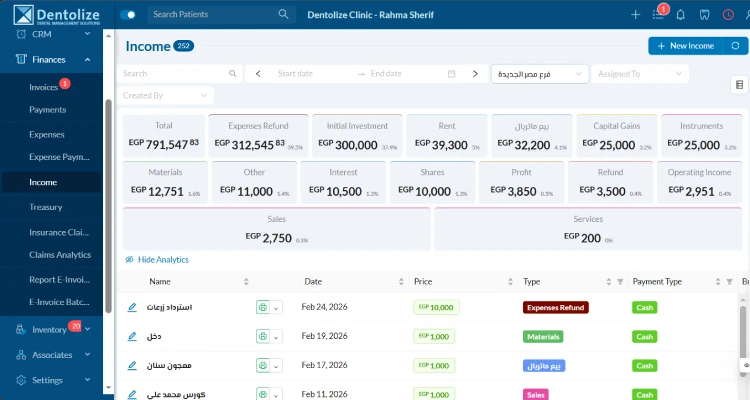
Dental clinic sustainability depends heavily on accurate financial management. Regardless of the dentist’s expertise or the quality of services provided, the absence of precise financial control can lead to unexpected losses and operational instability. Professional handling of dental billing software goes far beyond recording income and expenses; it requires a comprehensive analytical approach that ensures transparency, control, and data-driven decision-making within modern dental clinic accounting practices.
Many clinic owners focus primarily on clinical aspects while neglecting financial management, creating a gap between effort and actual results. For this reason, developing an integrated dental billing software system supported by platforms like Dentolize is a strategic step toward protecting financial stability and achieving sustainable growth.
Why Is Financial Management a Critical Factor in Clinic Success?
Daily operations inside a dental clinic involve multiple financial flows, including session fees, supply purchases, salaries, and tax obligations. Any error in organizing dental billing software can result in financial confusion, reduced management confidence, and weak planning capabilities across dental clinic accounting systems.
Accurate financial management helps to:
- Identify actual expenses
- Track daily revenue
- Evaluate monthly performance
- Improve overall profitability
When dental billing software is clear and well-structured, decision-making becomes more objective and efficient.
Core Components of the Clinic’s Financial System
Daily Revenue Recording
Every treatment session must be recorded immediately within the dental billing software, including service type and value. Accurate documentation prevents future discrepancies and supports reliable reporting aligned with professional dental clinic accounting standards.
Patient Invoice Management
Issuing organized and accurate dental invoices reflects clinic professionalism. Each invoice should clearly include treatment details, costs, and payment dates. Proper documentation of dental invoices within the financial system simplifies future reviews and audits.
Payment Tracking
Patients may pay via cash, bank transfer, or cards. Recording all payments daily through dental billing software ensures no revenue is lost or misreported.
Common Financial Management Mistakes
Delayed Documentation
Postponing financial entries leads to missing details. Any delay in updating dental billing software creates gaps between reality and records.
Mixing Personal and Clinic Finances
Combining personal and clinic accounts complicates profit analysis and weakens accurate performance evaluation within dental clinic accounting workflows.
Invoice and Payment Mismatches
Failure to reconcile dental invoices with received payments leads to unexplained discrepancies and reduced financial accuracy.
Importance of Periodic Financial Reports
Monthly reporting is essential for developing dental billing software systems. These reports clarify:
- Total revenue
- Total expenses
- Net profit
- Seasonal trends
Analyzing this data allows clinics to adjust operational strategies and improve performance.
Smart Expense Management
Dental billing software is not limited to income tracking; it also includes expense monitoring, such as:
- Sterilization materials
- Medical tools
- Salaries
- Rent and utilities
Careful expense tracking reduces waste and increases profitability.
Transition from Manual to Digital Management
Some clinics still rely on paper records, exposing dental billing software processes to human error. Digital systems offer:
- Real-time transaction recording
- Automatic linking of dental invoices
- Easy payment tracking
- Instant reporting
Digital transformation significantly improves dental clinic accounting accuracy and minimizes financial risk.
Financial Analysis and Decision-Making
Effective management goes beyond data entry to financial analysis. Reviewing dental billing software data helps identify:
- Most profitable services
- High-income periods
- Excessive expenses
This analysis directly enhances profitability and long-term planning.
Organizing Payment Policies
Clear collection policies stabilize dental billing software operations, such as:
- Advance payments for specific procedures
- Installment plans for major treatments
- Immediate issuance of dental invoices
These steps reduce delayed payments.
Tax and Legal Compliance
An essential part of dental billing software involves tax obligations. Neglecting this area can result in penalties. A structured accounting system supports:
- Accurate tax reporting
- Proper record retention
- Reduced calculation errors
Role of Specialized Systems in Financial Optimization
Many clinics rely on integrated management systems to streamline dental billing software processes. These systems combine revenue tracking, expense management, and performance monitoring.
Platforms such as Dentolize provide real-time financial tracking linked with operational reports, enhancing dental clinic accounting efficiency and reducing dependence on manual estimates.
Long-Term Financial Planning
Dental billing software is not limited to daily tracking; it supports strategic planning. Annual data analysis helps clinics:
- Identify expansion opportunities
- Evaluate new equipment investments
- Plan additional branches
Planning based on accurate data strengthens financial stability and reduces risk.
Financial Performance Indicators
To measure dental billing software efficiency, clinics can rely on:
- Expense-to-revenue ratio
- Average patient revenue
- Monthly growth rate
- Annual net profit
These indicators support data-driven decisions.
Training the Team on Financial Discipline
Successful dental billing software management depends on the entire team, not just accountants. Reception staff must be trained to record transactions immediately and verify amounts.
Team awareness of financial accuracy significantly improves clinic professionalism.
Potential Financial Challenges
Clinics may face challenges such as:
- Late patient payments
- Multiple payment methods
- Seasonal expense fluctuations
A clear dental billing software framework enables confident handling of these issues.
Building a Financial Culture Within the Clinic
Financial culture means that everyone understands the importance of accuracy within dental billing software operations. This culture prevents minor errors from becoming major problems and promotes transparency.
Conclusion
Managing clinic finances without errors is achievable through a clear system, daily discipline, and continuous analysis. Accurate transaction recording, expense monitoring, performance evaluation, and reliance on digital tools all ensure stable dental billing software operations.
Clinics that invest in modern solutions like Dentolize not only protect themselves from losses but also unlock sustainable growth and stronger dental clinic accounting control. In a competitive environment, precise financial management remains one of the strongest drivers of long-term success.