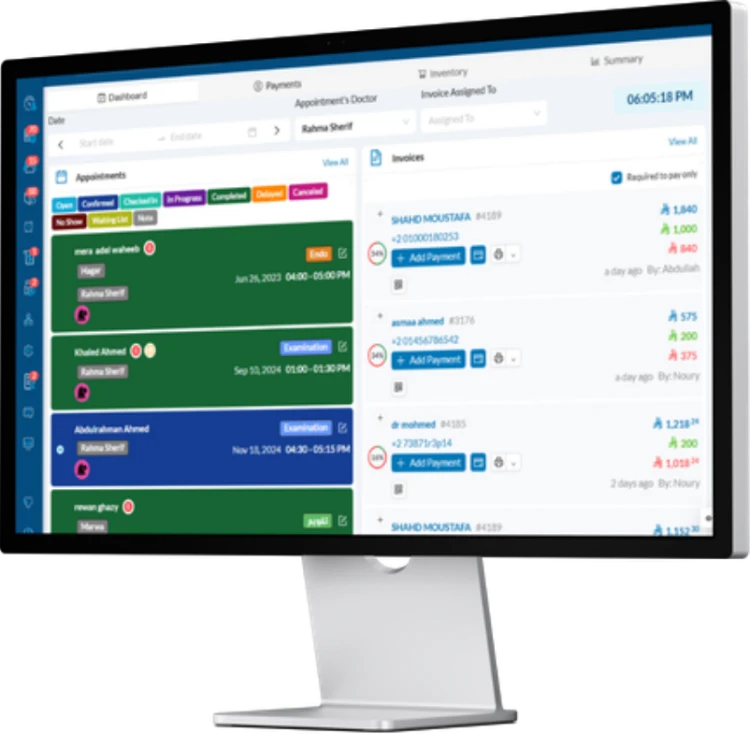
Dental clinics are among the most important healthcare institutions that require precise and smooth management to ensure the delivery of outstanding services to patients and to maintain business continuity. Workflow in a dental clinic is not limited to the dentist’s performance alone; rather, it includes all administrative and organizational processes that contribute to improving the patient experience and the efficiency of the medical team. This is where dental workflow management plays a vital role in organizing daily operations effectively. Therefore, understanding how to organize and manage workflow through proper dental workflow management has become an urgent necessity for every clinic seeking excellence and success in this field.
In light of technological advancements and the widespread adoption of digital clinic management systems, it has become possible to improve workflow in dental clinics in unprecedented ways. Modern tools such as dental operations software support appointment scheduling, medical staff management, and patient record tracking while enhancing overall dental clinic efficiency. By implementing structured dental workflow management, clinics can reduce human errors and save valuable time. This ultimately leads to increased patient satisfaction and higher productivity. This article highlights the most important strategies for improving workflow in a dental clinic, with a focus on practical methods and effective tools to achieve comprehensive management.
The Importance of Improving Workflow in a Dental Clinic
Improving workflow in a dental clinic is not merely a luxury; it is a fundamental element for ensuring the clinic’s long-term success. Applying clear dental workflow management strategies helps clinics avoid common operational challenges. Clinics that neglect workflow organization often experience appointment delays, staff workload pressure, and increased administrative errors, all of which negatively affect dental clinic efficiency. By strengthening dental workflow management, these issues can be significantly reduced.
One of the most important benefits of organized workflow is increased patient satisfaction. When patients find that their appointments are accurately scheduled and that the medical team is cooperative and efficient, their visit experience becomes smoother and more comfortable. Moreover, effective dental workflow management helps achieve higher efficiency for both medical and administrative staff. When tasks are clearly distributed and supported by dental operations software, clinics experience noticeable improvements in dental clinic efficiency, reduced stress levels, and increased overall productivity.
Steps to Improve Workflow in a Dental Clinic
1. Effective Appointment Scheduling
One of the most critical elements of workflow in a dental clinic is appointment scheduling. Accurate scheduling helps reduce waiting times and improves patient flow within the clinic. Implementing dental workflow management systems allows clinics to structure appointments efficiently and prevent overlaps. Digital tools and dental operations software enable online booking and automated reminders, reducing delays and no-shows while supporting better dental clinic efficiency.
Dividing appointments based on the type of service also enhances operational balance. For example, specific time slots can be allocated for simple procedures such as teeth cleaning, and others for more complex procedures such as prosthetics installation or dental implants. This organized approach, supported by proper dental workflow management, helps the dentist provide high-quality care without rushing or placing pressure on patients.
A well-structured workflow starts with accurate scheduling read our full guide on managing dental appointments efficiently to reduce no-shows and optimize clinic time.
2. Managing Medical and Administrative Staff
Effective staff management is a key step in improving workflow in a dental clinic. Clear role distribution is a core principle of successful dental workflow management, ensuring that each team member understands their responsibilities. Whether a dentist, dental assistant, or receptionist, structured coordination improves daily performance and strengthens dental clinic efficiency.
Continuous communication among team members is also a major success factor. Short meetings to discuss daily plans enhance coordination and reinforce structured dental workflow management. Additionally, training staff to use dental operations software improves accuracy, speeds up administrative processes, and contributes directly to higher dental clinic efficiency.
3. Using Technology to Improve Workflow in a Dental Clinic
Leveraging modern technology is a central element in optimizing workflow. Clinics that adopt dental workflow management systems supported by advanced dental operations software gain better control over daily operations and data management. These tools significantly enhance dental clinic efficiency by reducing manual processes and improving accuracy.
Digital patient records allow secure and fast access to medical information. Automated billing systems minimize financial errors, while inventory tracking prevents supply shortages. Together, these solutions strengthen dental workflow management and ensure smoother clinic operations.
4. Improving the Patient Experience
Enhancing the patient experience is closely linked to effective dental workflow management. Reduced waiting times and organized service delivery increase patient trust and satisfaction. Clinics that prioritize structured processes naturally improve dental clinic efficiency and overall service quality.
Modern booking applications and automated reminders, often integrated within dental operations software, help maintain organized schedules and consistent communication. Multiple communication channels also contribute to smoother interactions between patients and the clinic team.
5. Performance Monitoring and Data Analysis
Regular performance monitoring is essential for maintaining strong dental workflow management. Clinics that rely on data analysis can measure performance indicators and identify areas for improvement. Reports generated through dental operations software provide valuable insights into appointment volume, no-show rates, and operational bottlenecks, all of which influence dental clinic efficiency.
By continuously reviewing data, clinics can refine their dental workflow management strategies and ensure sustainable operational growth.
6. Simplifying Administrative Procedures
Simplifying administrative procedures makes workflow smoother and more organized. Structured documentation systems, often integrated into dental workflow management platforms, reduce paperwork and administrative delays. When administrative tasks are streamlined, dental clinic efficiency improves and medical staff can focus more on patient care.
7. Continuous Staff Training
Investing in staff training directly strengthens dental workflow management. Training medical and administrative teams to use dental operations software effectively ensures consistent performance and higher dental clinic efficiency. Continuous learning also allows clinics to adapt to technological advancements and evolving patient expectations.
8. Establishing Emergency Plans
Even well-organized clinics may encounter unexpected situations. Having structured emergency plans is part of comprehensive dental workflow management. Flexible scheduling and alternative task distribution help maintain stability and protect dental clinic efficiency during disruptions.
Conclusion
Improving workflow in a dental clinic is not a random task but an integrated process that requires precise organization, technology adoption, effective staff coordination, and continuous performance analysis. Implementing structured dental workflow management supported by reliable dental operations software allows clinics to strengthen dental clinic efficiency, reduce administrative errors, and improve patient satisfaction.
By following these strategies, your clinic can maximize available resources, maintain consistent dental workflow management, and achieve a fully integrated system that ensures outstanding patient care and long-term success in the market.