Owners
Limits who can see financials and who can export, which is where most real exposure sits.
A clinic holds medical histories, national IDs and payment records. The question is not whether that data is sensitive but who inside the clinic can see it, and whether you could prove who did.
Breaches at clinics are rarely dramatic. They are a receptionist who can see every financial report, or a departing staff member who exported the patient list on their last day. Both are permission problems.
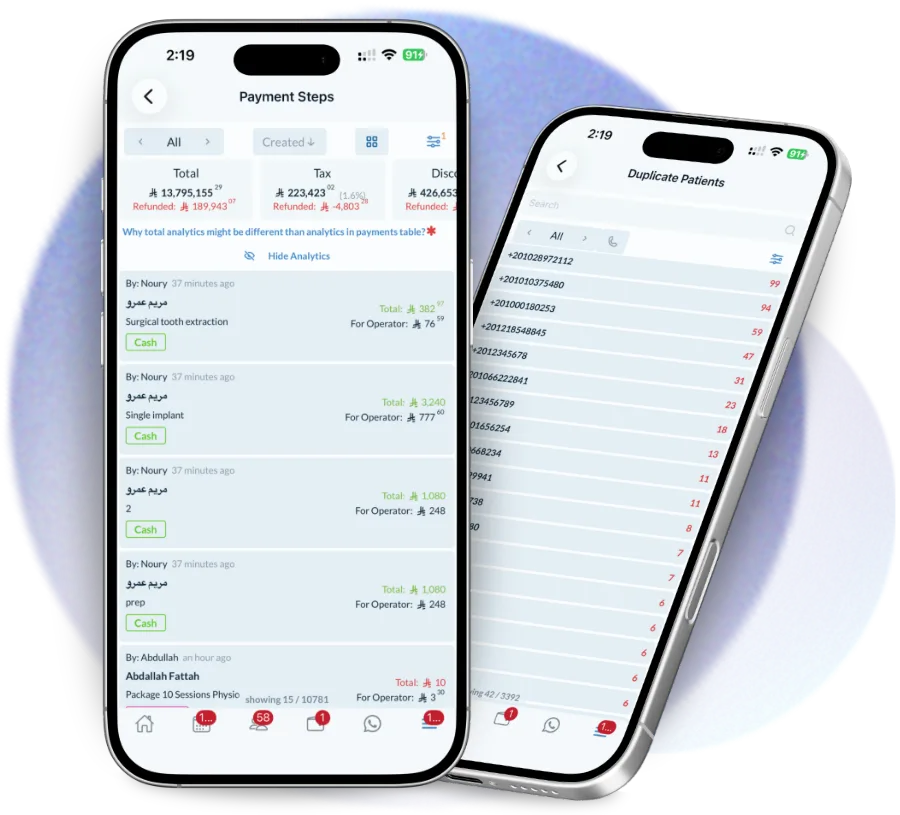
The value of a log is entirely in whether you can search it when something has gone wrong. Who opened this record, who changed this price, who deleted this appointment, and when.
Most security questions have specific answers and a vendor who cannot give them is telling you something. These are the ones worth asking anybody, including us.
Access control protects patients first and the clinic second, and it is the owner who carries the risk.
Limits who can see financials and who can export, which is where most real exposure sits.
Grants and removes access as staff join and leave, without calling support.
Their record is seen by the people treating them rather than by everyone with a login.
A shared login is the most common security arrangement in a small clinic, and the worst.
Only the roles you grant. Clinical and financial visibility are separate permissions, and access can be scoped to a single branch.
Yes, on views, changes and deletions, with before and after values, searchable by user, patient, date and action.
On managed cloud infrastructure with encryption in transit and at rest, and automatic backups. Hosting region is confirmed during onboarding.
Their account is disabled immediately and their history in the audit trail remains, which is the point of named accounts rather than shared ones.
Yes. Export is its own permission precisely because it is the action that takes data out of the clinic.
Thirty minutes on how your clinic actually runs, not a generic slideshow. We will call you within 24 hours.