Dental and medical history questionnaire
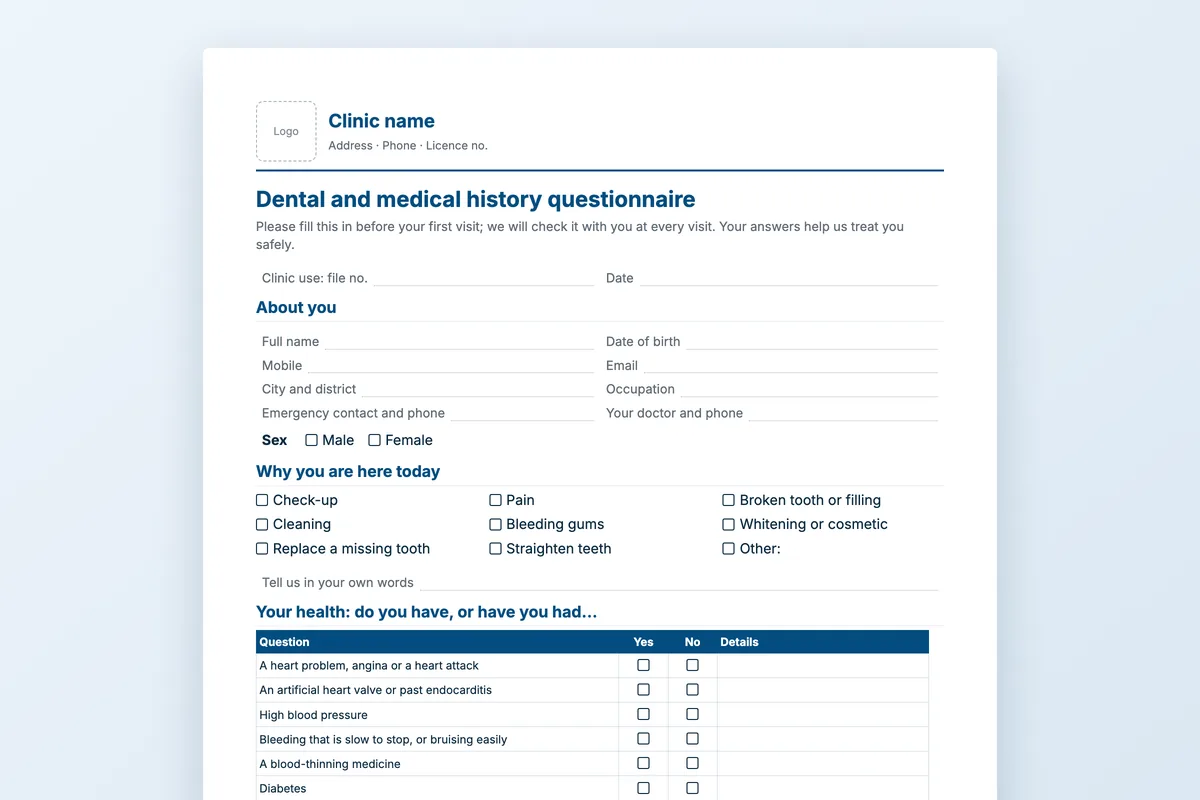
The form a patient fills in at reception, written in plain words and limited to what changes dental care. Every medical question has yes, no and a space for details, and the clinic signs off each time it is reviewed.
Download
- Word · English.docx · 40 KB
- PDF · English.pdf · 290 KB
- Word · Arabic.docx · 41 KB
- PDF · Arabic.pdf · 114 KB
FreeNo sign-upDownloads directly
What is on the two pages
| About you | Name, date of birth, contact details, occupation, an emergency contact and the patient’s own doctor. |
|---|---|
| Why you came | Check-up, pain, a broken tooth, cleaning, bleeding gums, cosmetic work, a missing tooth or straightening, and a line in their own words. |
| Medical questions | Sixteen yes or no questions chosen for the dental chair: heart conditions and valves, blood pressure, bleeding and blood thinners, diabetes, epilepsy, hepatitis, head and neck radiotherapy, osteoporosis medicines, joint replacements, steroids, and pregnancy. |
| Medicines, allergies and tobacco | Every medicine including supplements; allergies to antibiotics, latex, local anaesthetic and painkillers; cigarettes, shisha, vaping and chewing tobacco. |
| Teeth, anxiety and consent | Last visit, past problems with injections or extractions, bleeding gums, grinding, a 0 to 10 anxiety scale, brushing habits, the declaration, a privacy line and a review box for the clinic. |
How to use it
Hand it over before the appointment
At reception, or send the PDF ahead so it comes back filled in. Keep blank copies at the desk.
Read it before the patient sits down
Every yes needs a word with the patient. Copy the ones that change treatment to the alerts on your examination record.
Review it at every visit
Ask whether anything has changed, note it in the review box and have the patient initial it.
Keep it with the record
File it with the patient’s notes, where only the treating team sees it.
Who it is for
Every dental clinic, for new patients and for the yearly update of returning ones. It is written for patients, in Arabic or English, and keeps the questions a general medical intake asks but a dentist rarely needs off the page, so patients finish it before they are called in.
Read next
Patient profile
One patient file with medical history, dental chart, x-rays, invoices, payments and consent in one place. Dentolize keeps the whole record…
Read more In DentolizeQR codes
QR codes for invoices, prescriptions, lab orders, payments and check-in. Every document gets a scannable link that opens instantly.
Read more From the blogImproving patient experience in dental clinics
First contact, clear communication and a calm room. The parts of the experience a clinic controls and mostly ignores.
Read moreMore free files
Questions
Why ask about bisphosphonates?
Bone-strengthening tablets and injections for osteoporosis or cancer raise the risk of jaw problems after extractions and implants. Patients rarely think to mention them.
Why ask about shisha separately?
Many patients who smoke shisha answer no to “do you smoke?”. Its effect on gums and healing is the same reason to ask.
Is the consent wording legally sufficient?
It is general wording for agreement to examination and radiographs. Review it with your legal adviser and adapt it to your country before use.
Can patients fill it online?
The PDF can be sent ahead by email or WhatsApp to print and bring. On paper it remains a form; the answers reach your system when someone enters them.
Medical alerts on every appointment
In Dentolize the patient profile carries the medical alerts onto every appointment, and a QR code at reception lets patients check themselves in. Thirty minutes on your own clinic.